




Anesthesia Informatics and Media Lab
For an enhanced experience, get the free flash player
the aim lab

AIM Logo

lab director

Larry Chu
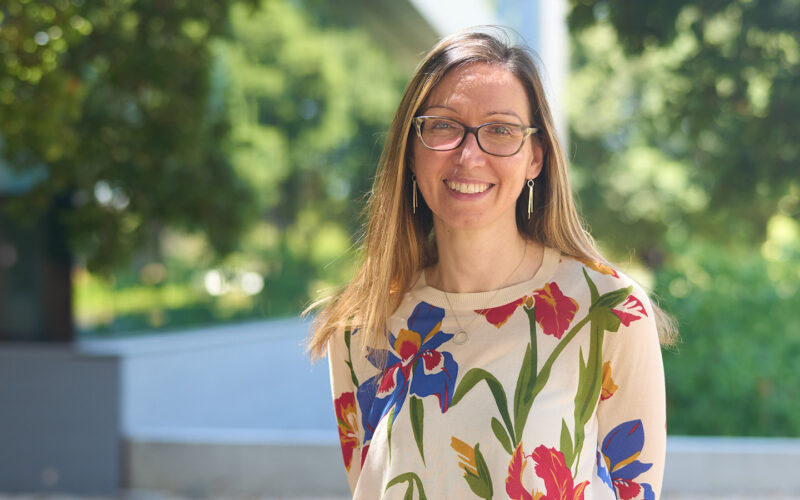
Stanford Anesthesia Informatics and Media Lab is directed by Larry Chu, MD, MS (BCHM), MS (Epidemiology), an Assistant Professor of Anesthesia.

staff and collaborators
Mission of the stanford aim laboratory

The purpose of the Stanford Anesthesia Informatics and Media Lab is to: 1) innovate new uses of internet- and media-based technologies for research, clinical care and medical education, 2) develop and test new informatics approaches to support the broad missions of the Department of Anesthesia at Stanford, 3) conduct and publish research to generate new knowledge in the area of anesthesia informatics and 4) promote use of informatics and media technology in medicine and teach other clinicians and researchers how to implement these techniques in their own work.

Medicine X Stanford
medicine x

The AIM Lab is excited to be producing Stanford Medicine X, a conference dedicated to emerging technologies at the intersection of health and medicine. Click here to find out more!

News and Updates

AIM Lab's StanMed App Goes to the Bedside

StanMedJune 7, 2011. StanMed is the AIM lab's first iPad-native app that is designed to support learning at the bedside. Now the Stanford School of Medicine is taking the app to the wards by incorporating the use of iPads and StanMed for all Stanford medical students during their core critical care medicine rotation. This will be an exciting opportunity to field test StanMed and see how Millennial students use content for just-in-time learning at the point of care," says Dr. Larry Chu, creator of StanMed and Director of the Stanford AIM lab.

AIM Lab receives $15,000 Prize from IARS for Innovation in Education

OCT 15, 2011. The AIM lab is delighted to announce that Dr. Larry Chu has been selected as the 2011 winner of the Innovation in Education award from the International Anesthesia Research Society. The award will be presented in Boston at the 2012 IARS meeting and comes with a $15,000 prize.

AIM Lab receives Simulation and Ed Tech Mini-grant

MARCH 19, 2011. The AIM lab is delighted to announce that it was selected to receive a Simulation and Ed Tech mini-grant from the Stanford University School of Medicine in support of our project for developing interactive human-computer interface for managing advanced cardiac life support. The project is being conducted in collaboration with Dr. Scott Klemmer and his students Leslie Wu and Jessie Ciremele in the Computer Science Department.

AIM Lab receives $25,000 Pfizer Grant for Continuing Medical Education

APRIL 15, 2011. The AIM lab is delighted to announce that it has been selected to receive a $25,000.00 grant from the Pfizer CME program to complete a project entitled, "iPad Application for Teaching Crisis Management Skills to Enhance Management of Adult ACLS". Dr. Larry Chu is the Principal Investigator on the project

AIM Lab receives $15,000 Gift from the Gregorios Charitable Fund of the San Antonio Area Foundation

MAY 5, 2011. The AIM lab is delighted to announce that it received a generous donation from the Gregorios Charitable Fund of the San Antonio Area Foundation "in support of Dr. Chu's innovative work to produce educational products with applications for iPad and iPhone to be used by medical students and residents.

AIM Lab receives Simulation and Ed Tech Mini-grant

MARCH 19, 2011. The AIM lab is delighted to announce that it was selected to receive a Simulation and Ed Tech mini-grant from the Stanford University School of Medicine in support of our project for developing interactive human-computer interface for managing advanced cardiac life support. The project is being conducted in collaboration with Dr. Scott Klemmer and his students Leslie Wu and Jessie Ciremele in the Computer Science Department.

RECENT publications and presentations

Stanford Anesthesia lab launches new iPad app


On Tuesday the Stanford Anesthesia Informatics and Media Lab (AIM) released a new iPad application designed to be used as an educational tool in the critical care student clerkship at the School of Medicine. According to the app description:

StanMed is an iPad app designed to be used by Stanford medical students, residents, fellows and faculty. We intend StanMed to be used in the classroom and at the bedside. StanMed will provide clinically useful educational modules, tutorials, videos, podcasts and cognitive aids to help facilitate learning at the point of care.
The application is free, but is currently open only to Stanford University affiliates with valid SUNet IDs. AIM is directed by Larry Chu, MD.
Read More via Scope Blog>

New online learning approach prepares doctors for Stanford residencies

Dr. Chu filming START Program

by Tracie White

At first you just see the medical resident’s hands on the video screen and hear him muttering to himself.

“Syringe…,” he says under his breath, as he nervously opens and closes the medical supply drawers searching around for what he might need. He fills a syringe with some milky liquid, tentatively preparing an IV for his patient, looking around for help.

“Are you ready to go?” booms out the voice of the attending physician whose face suddenly fills the screen of this educational video. “The patient is a 24-year-old with a penetrating trauma to the belly. OK, stop! You’re going to use propofol on this patient?!!!” Read More via Inside Stanford Medicine Website>

Online Presentation - SEA Spring 2010 Meeting

Teaching Milennials - What do Residents Really Want?

Larry Chu, Assistant Professor of Anesthesia at Stanford presented a General Session talk about Millennial students and their unique learning needs and expectations at the SEA Spring 2010 meeting in Pittsburgh. Dr. Chu will explore the relationship between computer technology and various generations of Americans, including matures, baby boomers, Generation Xers, and Millennials. He will discuss how society's relationship to technology changed dramatically during the formative years of the Millennial generation, leading to unique learning characteristics of students from this generation. Dr. Chu will discuss various ways educators can engage Millennial students using online technologies and why it is important that educators learn about technology.

 You can view the talk online (MS Silverlight required), by iTunes Audio Podcast, or iTunes Video Podcast.

Several SEA members have written me in recent days with links to additional articles that discuss possible negative effects of technology on mental performance. I provide a link to some of these articles below (thanks to Drs. Williams and Balzer for sending me these articles):
» Hooked on Gadgets and Paying a Mental Price
» Research out of Stanford about multitasking
» NPR interview with Nicholas Carr, author of The Shallows -
   What the Internet is Doing to our Brains

RECENT publications and presentations
  • » Information Technology and its Role in Anaesthesia Training and Continuing Medical Education, Chu LF, Erlendson MJ, Sun JS, Clemenson AM, Martin P and Eng RL. Best Practice and Research Clinical Anaesthesiology, In Press, 2012.
  • » Use of Technology in Anesthesia Resident Education. Virginia Mason, Department of Anesthesia, Grand Rounds, January 16, 2011.
  • » Analysis of 4999 Online Physician Ratings Indicates that Most Patients Give Physicians a Favorable Rating. Kadry B, Chu LF, Kadry B, Gammas D, Macario A. J Med Internet Res. 2011; 13 (4): e95
  • » Use of Technology in Medical Student and Resident Education. Society for Education in Anesthesia, Breakfast Panel Workshop, ASA Annual Meeting, October 16, 2011.
  • » Design Thinking in Anesthesia. Yale University Department of Anesthesia Grand Rounds. New Haven, Connecticut, October 4, 2011.
  • » Podcasting 101: How to create engaging educational podcasts to enhance resident learning using simple computer programs. Society for Education in Anesthesia, Spring Meeting Workshop. San Antonio, Texas, June 2011.
  • » Moodle 101: How to teach students online using a simple web-based program. Society for Education in Anesthesia, Spring Meeting Workshop. San Antonio, Texas, June 2011.
  • » Teaching a New Generation of Physicians: Connecting with Residents in 2011. I Panel Discussion with Edward C. Nemergut, Larry F. Chu, and Christine S. Park. International Anesthesia Research Society Annual Meeting, Vancouver, Canada, May 23, 2011.
  • » Fresh START: A Blended Learning, Virtual Mentorship and Social Networking Pre-Residency Online Program, Third World Congress on Social Media and Web 2.0 in Health, Medicine and Biomedical Research, Maastricht, The Netherlands, November 29, 2010.
  • » Self-reported information needs of anesthesia residency applicants and analysis of applicant-related website resources at 131 U.S. training programs. Chu et al., Anesthesia & Analgesia, November 16, 2010 [PMID 21081766].
  • » Fresh START: A Blended Learning, Virtual Mentorship and Social Networking Pre-Residency Online Program, American Society for Anesthesiologists Annual Meeting, San Diego, CA, October 18, 2010.
  • » The Role of Social Networking Applications in the Medical Academic Environment. Chu et al., Int Anesthesiol Clin. 2010 Summer;48(3):61-82. [PMID 20616638]
  • » Learning Management Systems and Lecture Capture in the Medical Academic Environment. Chu et al., Int Anesthesiol Clin. 2010 Summer;48(3):27-51. [PMID 20616636]
  • » Fresh START: A Blended Learning, Virtual Mentorship and Social Networking Pre-Residency Online Program, Society for Education in Anesthesia Spring Meeting, Pittsburg, Pennsylvania, June 10, 2010
  • » Anesthesia 2.0: Incorporating Web 2.0 Technologies into Anesthesia Education, Society for Education in Anesthesia Spring Meeting, Pittsburg, Pennsylvania, June 10, 2009
  • » Anesthesia 2.0: Internet-based information resources and Web 2.0 applications in anesthesia education. Chu et al., Current Opinions in Anaesthesiology, January 19, 2010. [PMID 20090518]
  • » Anesthesia Informatics: Intranet, e-Learning, and Mobile Computing in Anesthesia Education. Stanford Anesthesia Grand Rounds, Stanford, California, November 23, 2009
  • » The Stanford ETHER project. ASA Intranet Workshop, American Society of Anesthesiology Annual Meeting, New Orleans, October 19, 2009
  • » What do Residents Really Want? Medicine 2.0 Conference, Toronto, Canada, September 17, 2009
future presentations
  • » Lights, Camera, Anesthesia! Society for Education in Anesthesia, Breakfast Panel Workshop, ASA Annual Meeting, June 1, 2012.
  • » Simulation-based Evaluation: Integrating Validated Formative Evaluation Tools into Simulation Debriefing for Beginners. Society for Education in Anesthesia, Breakfast Panel Workshop, ASA Annual Meeting, June 2, 2012.
Current AIM Projects
StanMedStanMed:A new moblie learning platform for the iPad, designed to be used at the point of care. Now available on the App Store for Stanford Anesthesia affiliates.
» STARTSTARTed: A one-year curriculum for ABA Part 1 exam competency.
»

STARTSTART: Successful Transition to Anesthesia Residency Training

» ETHERETHER: Resources for Anesthesia Education and Research
   
» ExCEL: Extended Curriculum Enhancing Learning (a blended learning anesthesia curriculum)
» Lecture Capture
» A Day in the Life of Stanford Anesthesia
» NEJM LMA Project
» Stanford Advanced Airway Workshop
» Stanford Anesthesia Residency Website
LINKS and information
anesthesia informatics fellowship

Stanford Medicine Resources:

Footer Links: